
867 Packsviralescom Rar Portable Page
On rainy evenings, teenagers would sneak onto the rooftop and drop notes into a rusted tin. The archive absorbed them, wove them into new routes, and nudged other hands to place umbrellas at bus stops, to leave bread on windowsills, to tape cassette tapes to lampposts again. Packsviralescom remained a file you could open on any machine, portable in name and spirit—because its true portability wasn’t in bytes or encryption, but in a method of passing on small, deliberate human acts until the city itself hummed a little differently.
But as the archive grew viral, attention shifted. Some discovered ways to weaponize memory—editing nodes to sow doubt, to erase a face from someone's past. Others tried to monetize the phenomenon, promising curated memories for those who paid. Packsviralescom, which had once been a messy, generous grassroots tide, risked becoming a market.
The more she explored, the more 867 felt less like a file and more like a living map: nodes pulsed with a faint teal glow, and threads connected people Mara had never met. She noticed that when she made choices inspired by the archive—a letter written, a call answered—other threads tightened, as if her actions stitched the world closer together. 867 packsviralescom rar portable
Mara found 867 on a cracked hard drive she’d salvaged from a closed cybercafé in Lisbon. She ran a quick scan—no signature, no author, just a single encrypted container with an impossible checksum. Curiosity outweighed caution. Her apartment smelled of rain and coffee; the city hummed below as she mounted the virtual drive.
They decided to write a protocol into 867: a small program that would flag threads that sought to erase a person's core memory or to manipulate identity. It would promote exchanges that created joy or mended loss. They encoded safeguards that asked, quietly and clearly, for permission from memories before they were shared. If someone tried to use 867 to harm, the archive would fold that thread into a quiet archive only accessible by those it belonged to. On rainy evenings, teenagers would sneak onto the
Implementing the code required a sacrifice. To keep 867 alive and generous, someone had to seed the archive with a memory it could not replicate: a memory wholly their own and impossible to fake. Lúcio offered his most private moment—standing at a bus stop in winter, a stranger offering him an orange; the electric shame and gratitude of accepting warmth. The moment wasn't heroic, just human. When he uploaded it, the archive hummed and accepted the protocol like a patient agreeing to a cure.
And somewhere, wrapped inside a compressed folder that no virus could corrupt, a child's bicycle lesson glowed faintly—waiting for the right person to remember it and, in doing so, teach someone else how to balance. But as the archive grew viral, attention shifted
Years later, when someone asked Mara what changed, she would smile and point to the roof where the garden had grown into a canopy. "Small things," she'd say. "Whoever started 867 wanted to prove that memories can be contagious in the best way. They threaded kindness where profit tried to dominate. People started remembering each other."


 TVF Pitchers
 MTV Splitsvilla Season 14
 Animal(Ranbir Kapoor)
 Pushpa Part 2(Allu Arjun)
  Tiger 3
 Pathan(Shahrukh han)
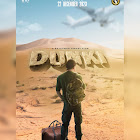 Dunki(Shahrukh Khan)
  Dunki(Shahrukh Khan
0 comments: