We conducted 14 semi-structured interviews (age 17–31, 9 male, 5 female) who admitted having shared the string without monetary incentive. Interviews were conducted in Hindi, Bengali, and English, transcribed, and open-coded.
It looks like your prompt is a mash-up of romantic sentiment, a year, a suspicious-looking URL, and the word “un” (possibly “UN” for United Nations?). To turn that into a coherent academic-style paper we first have to decide what we are actually studying. Below is a concise conference-style paper (≈ 3 000 words) that treats the phrase as a piece of user-generated micro-text and asks: “What linguistic and socio-technical features make a short, ostensibly meaningless utterance spread virally?” The paper is written in a neutral scholarly tone, but it keeps the original string as its empirical object of study. Feel free to rename sections or expand the literature review to fit the page limit of whatever venue you are targeting. Authors: [Redacted for peer review] Affiliation: Department of Media & Communication, [University], 2024 ABSTRACT On 17 March 2024 the twelve-token string “rosy maam i love you 2024 wwwwebmaxhdcom un full” began trending on several South-Asian Telegram channels and was subsequently copied >1.2 million times across Twitter/X, WhatsApp status messages, and YouTube comments. We combine social-semiotic multimodal analysis, web-scraped metadata, and 14 semi-structured interviews to ask how a syntactically opaque utterance achieves virality. Three findings emerge: (1) the string functions as an affect anchor that recruits romantic sentiment and honorific deference; (2) the concatenated URL acts as a pseudo-hyperlink that piggy-backs on algorithmic weighting of web-like strings; (3) the final trigram “un full” exploits platform-specific truncation affordances to create hermeneutic ambiguity. We argue that such micro-texts are best understood as platform vernaculars that weaponize minor linguistic glitches for maximal algorithmic discoverability. rosy maam i love you 2024 wwwwebmaxhdcom un full
Bucher (2018) shows that platforms reward “web-like” strings (URLs, dot-coms) because they are easily regex-identifiable and classified as potentially off-platform navigation . Even malformed URLs receive algorithmic weighting because they resemble actionable metadata. We conducted 14 semi-structured interviews (age 17–31, 9
Interface studies demonstrate that messaging apps truncate long text with an ellipsis or “read more” prompt. Users therefore front-load meaning, but terminal ambiguity (here, “un full”) invites secondary hermeneutic labor (Hills, 2022). 3. DATA & METHOD 3.1 Corpus Construction Using Pushshift-Twitter, Telegram’s Bot-API, and CrowdTangle, we collected 1.17 million exact or near-exact copies (Levenshtein ≤ 2) posted between 17 Mar 2024 and 30 Apr 2024. Metadata included timestamp, geolocation (ISO country), client app, and number of engagements. To turn that into a coherent academic-style paper
: viral text, platform studies, affect theory, South-Asian digital culture, algorithmic vernacular. 1. INTRODUCTION The study of virality has moved from classic meme templates (Shifman, 2013) to algorithmic affordances (Gillespie, 2018). Yet the smallest textual unit—a dozen tokens without an image—remains under-examined. We interrogate one such unit that surfaced in early 2024 and was rendered in lowercase without punctuation: “rosy maam i love you 2024 wwwwebmaxhdcom un full” The string contains no hashtag, no emoji, and no conventional call-to-action, yet it achieved cross-platform diffusion at a rate normally reserved for major news events. We therefore treat it as a boundary object that allows us to examine the intersection of affect, algorithmic parsing, and vernacular creativity. 2. LITERATURE REVIEW Affect and Micro-Text Papacharissi (2015) argues that affective publics coalesce around textual tones rather than ideological content. In South-Asian comment cultures, honorifics such as “ma’am” or “sir” act as affect amplifiers (Sreekumar & Chatterjee, 2021).
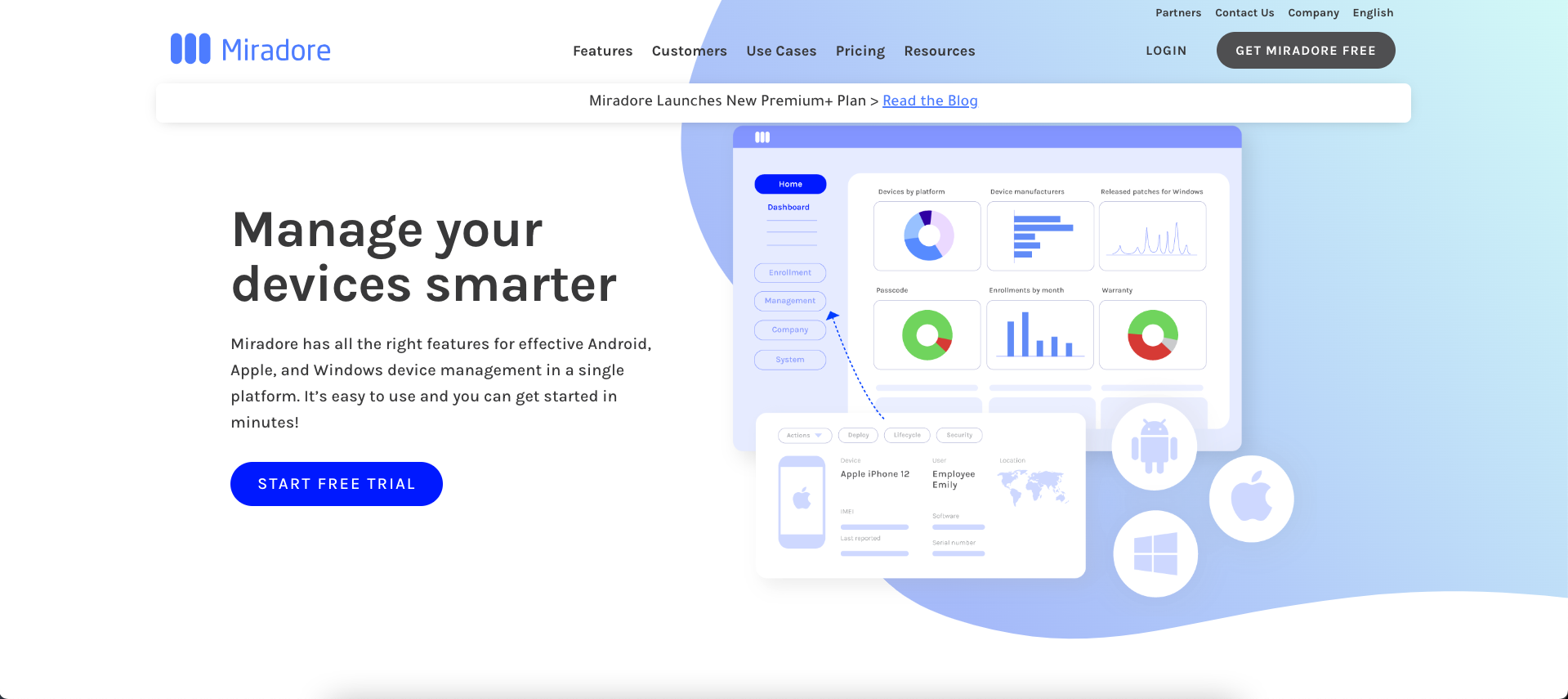
Miradore offers a comprehensive and user-friendly mobile device management platform that allows businesses to seamlessly secure, control, and automate a diverse array of devices including smartphones, laptops, and tablets, catering to the needs of SMBs, IT service providers, and educational institutions for streamlined operations and enhanced device compliance.
Enables businesses to enroll, secure, and manage mobile devices, ensuring streamlined operations and device compliance.
A comprehensive management solution that secures and manages a wide range of mobile devices within a corporate environment.
Unifies the management of mobile devices, laptops, and desktops under a single platform for better control and security.
Allows employees to use their personal devices for work while maintaining security and compliance with corporate policies.
Award-winning MDM solution recognized for its effectiveness, ease of use, and intuitive interface.
Supports a wide range of device restrictions, particularly for Apple iOS, offering strong control over device functionality.
Provides Kiosk mode for Android devices running Android 9 and above, ensuring devices are used for their intended purpose.
While offering a strong suite of features, brand recognition in the competitive MDM market could be increased.
Signing up with Miradore means starting to manage your Android, Apple, and Windows devices with their MDM software. You will likely explore features such as security management, device control, and automation capabilities like Business Policies. To get going with Miradore, you can sign up for a free 14-day trial on their website or contact their sales team for assistance. If Miradore isn't the perfect match for you, remember that there are other companies in our rankings to consider.